
GC No. 27 MEET
A SPACE TO REFLECT AND RECOMMEND
DATE: 14 JUNE 2025
VENUE: INDIA INTERNATIONAL CENTRE, NEW DELHI
ORGANISERS: MARG and DR. A. V. BALIGA MEMORIAL TRUST
The tranquil ambiance of the India International Centre (IIC) witnessed an indefatigable assembly of 38 deliberators, gathered to reflect on and offer recommendations on General Comment No. 27 of the United Nations Committee on the Rights of the Child (UNCRC).
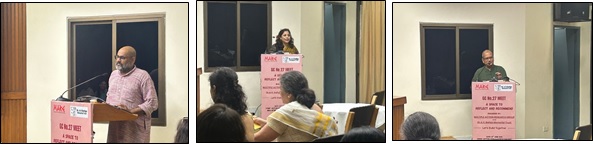
The meeting began at 10 a.m. with a welcome address by Mr. Ashok Singh Jha, Executive Director, A. V. Baliga Memorial Trust. This was followed by an introduction to the objectives of the meeting by Ms. Sana Siddiqui, Executive Director, MARG. As a prelude to this meeting, an engaging series titled ‘Learning and Conversation Series’ was launched by MARG from 19th May 2025 to 5th June 2025, with a focused discussion on Draft General Comment No. 27 (GC 27), addressing children’s right to access to justice and effective remedy. Ms. Sana shared the vision of MARG which aims to foster critical dialogue among policy experts, practitioners and community voices.
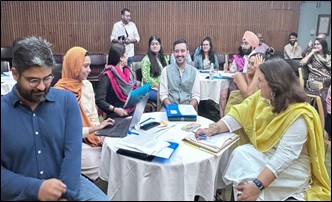
Group Discussion
In continuation of the Learning Series, this GC 27 meet was convened to meaningfully conclude the dialogue on the Draft General Comment No. 27. The session began with a brief yet insightful introduction by Mr. Anant Kumar Asthana, Civil Rights Activist and Advocate. He brought a sharp lens to its purpose, scope and relevance to advancing child rights in India with his usual wit, presentation of facts and interesting anecdotes. Following a short tea-break, the assembly reconvened to work on the recommendations proposed to be sent to the CRC. To facilitate an effective and time bound dialogue, the deliberators were segregated into six thematic review groups, each exploring a specific theme drawn from the Draft General Comment No. 27. The thematic focus areas were:
- Children Living with Disabilities and Mental Health Concerns – Moderator Ms. Vaidehi Subramani
- Justice for Child Victims, Witnesses, and Children in Conflict with the Law – Moderator Ms. Tanima Kishore
- Barriers to Access to Justice for Children from Economically and Socially Disadvantaged
Sections – Moderator Ms. Anisha Ghosh
- Child Protection and Rights of Children in the Digital Space – Moderator Ms. Chitra Iyer
- Children Excluded from the Legal Framework – Moderator Ms. Tanmoyee
- Strengthening Stakeholders Capacity for Child-Centred Justice – Moderator Mr. Vedprakash Gauta
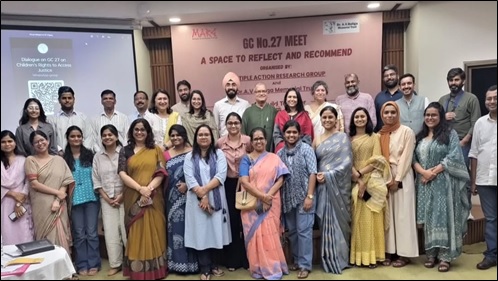
Participants Group photo
The six groups engaged in detailed discussions with a fine-tooth comb to dissect the document into small parts so that each section was minutely read, observed, evaluated, understood and assessed. After an initial energetic idea exchange, the deliberations gradually transitioned into the process of refining and concretising those ideas. The inputs from each member of the group were considered and deliberated upon. The moderators ensured that the essence of the discussion remained GC No. 27, preventing them from veering towards the broader rights of a child. Despite this being a challenging task, the moderators ensured the deliberations remained sharp, focused and calibrated to the topic. The thematic group-wise discussions, thus, culminated in listing the recommendations.
The next step involved each group presenting their inputs and recommendations. These presentations detailed the outcomes of the group discussions, with a focus on highlighting the key points and insights. While the expected outcome was to be purely recommendation-based, the presentations naturally took a broader view of the themes, reflecting the vast scope of the topic at hand. After each group presented its recommendations, consensus was reached to adopt the template provided by Group One as the standard format. Their recommendations were recognized for their clarity and alignment with established guidelines, serving as a model for the subsequent groups. It was decided that the moderators from each group would share the recommendations with MARG by 20 June 2025. Subsequently, MARG would compile all recommendations and share a consolidated document with the members who were part of the deliberations. Each member could then use the compiled recommendations as a reference to draft and submit their individual inputs to the committee by 30 June 2025. There would be no restriction on the
repetition of recommendations.
On this note, the meet culminated with a shared commitment to continue working towards bringing a transformative change to the lives of children, grounded firmly within the legal framework.